Luna does the work. You make the decisions.
Four steps, and the fourth one is you. That is not a disclaimer bolted on at the end: Rule 206(4)-7(c) requires your firm to designate a chief compliance officer, and no software discharges that. What software can do is take on much of the reading, tracking and chasing the role generates.
It watches
Your registration creates a fixed set of obligations, each on its own cadence. Luna seeds them, generates every occurrence, and reminds whoever owns each one on that obligation's own schedule, which you can change. Nothing sits pending quietly: once a due date and its grace period pass, the instance is marked overdue, and follow-ups go out until it is done, reaching the CCO after a week.
Compliance calendar →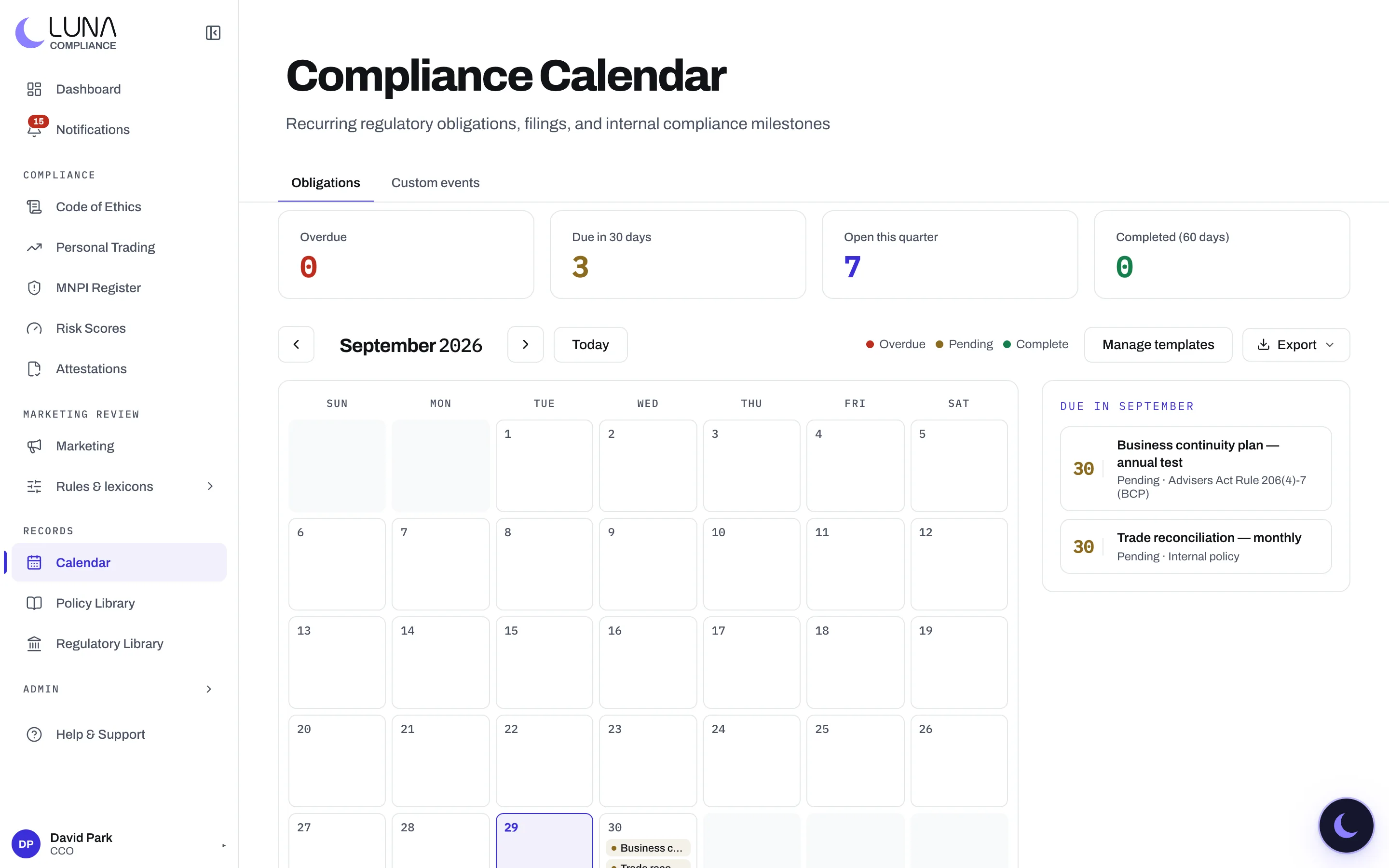
It finds
Risk is scored per person every day, from code of ethics breach history, the number and value of gifts filed, ongoing outside business activities, open conflicts and the share of preclearance requests denied, and you are alerted when someone's score turns high. The point is not the number. The dashboard ranks your people by open items, so it tells you three of them account for most of what is waiting on you, which a folder of filings never does. Risk scoring is on Firm Plus.
Which plans include scoring →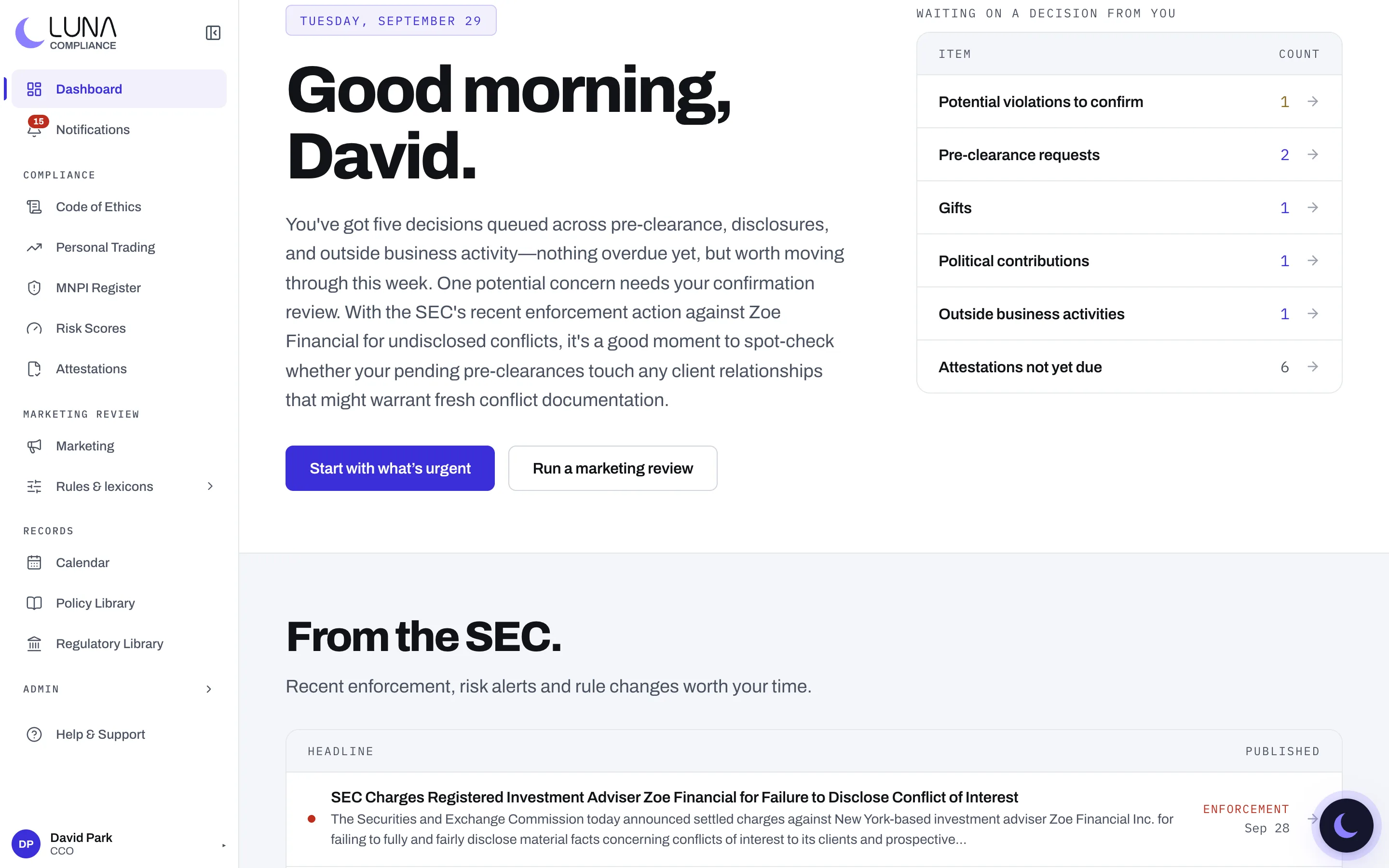
It drafts
An advertisement goes in and findings come back, each citing the rule it fails and saying where in the piece it sits, down to the page or slide in a PDF or a deck. A preclearance request arrives already checked against your restricted list, your blackout window and the household accounts subject to the same rules, with every rule that fired listed in order.
Marketing review →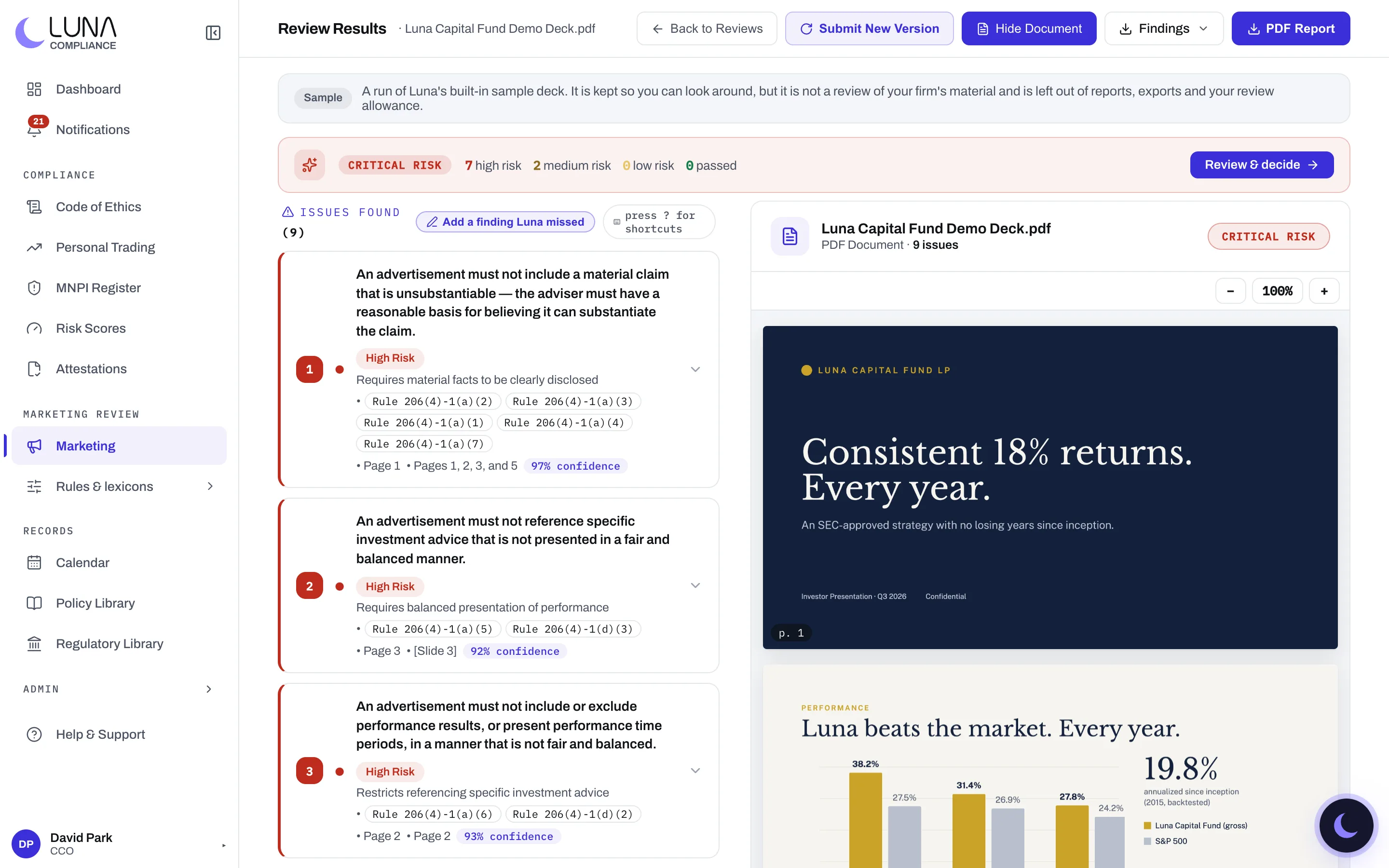
You decide
Every finding reaches a person with the rule behind it cited, and every preclearance request that needs a review arrives with the rules that fired. No approval or denial is made on a model output. The only automatic decisions are three preclearance cases, a restricted-list hit, a trade by someone on that issuer's MNPI insider list, and a clearly exempt security, recorded as the system's. Approvals and denials carry who decided and when, and a denial carries the reason given, which is the answer to the question an examiner actually asks.
Luna is software. It is not a law firm, it gives no legal advice, and using it creates no attorney-client relationship and no privilege.